
Dog Spay Incision Healing Process
If your dog was recently spayed, you’re probably watching her incision site closely and wondering what’s normal. The dog spay incision healing process typically takes 10 to 14 days for the outer skin to close, though full internal healing can take up to 6 weeks. Understanding what to expect at each stage helps you support your dog’s recovery and recognize any signs that warrant a call to your veterinarian.
At Humane Animal Medical & Surgical Hospital, our experienced team performs spay surgeries regularly, and we know how much pet owners care about their dog’s comfort and wellbeing during the recovery period. This guide walks you through the complete spay incision healing timeline, what normal healing looks like, and when it’s time to contact our team.
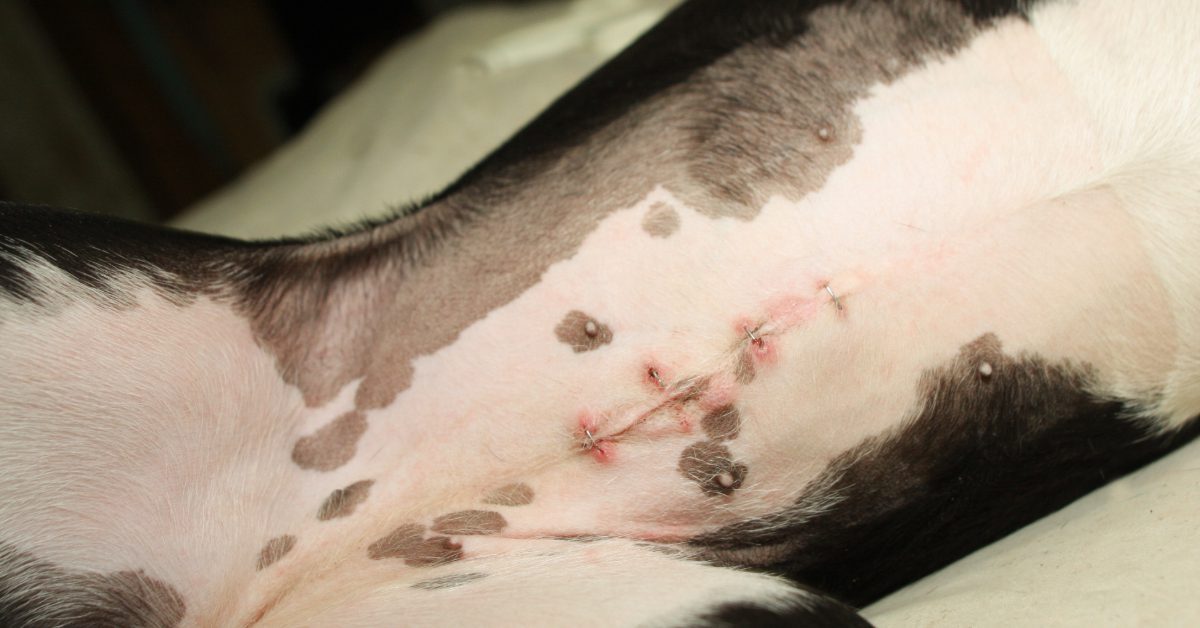
What Does a Normal Dog Spay Incision Look Like?
A healthy spay incision will typically appear as a clean, closed line on your dog’s abdomen. In the first day or two, mild redness, slight swelling, and minor bruising around the incision site are completely normal. The skin edges should be touching, and the area may look a little pink or slightly puffy. This is simply your dog’s body beginning the natural healing process.
Normal Signs During the Dog Spay Incision Healing Process
- Mild redness and slight swelling in the first 2 to 3 days
- Light bruising or skin discoloration near the incision
- Small amounts of clear or slightly pink-tinged discharge in the first 24 hours
- Skin that appears to be pulling together or scabbing lightly along the incision line
- Your dog occasionally licking or sniffing the area (though this should be discouraged)
By days 3 through 7, redness and swelling should begin to subside. The incision will start to knit together, and any surface scabbing is part of the normal spay incision healing process. You may notice the surrounding skin feels slightly firm, which is typical as new tissue forms beneath the surface.
What Does an Infected Dog Spay Incision Look Like?
While mild inflammation is expected, there are clear signs that something may be wrong with the incision site. An infected or problematic spay incision often presents with increasing redness (rather than decreasing), significant swelling, warmth to the touch, yellow or green discharge, a foul odor, or a wound that appears to be opening rather than closing. If your dog’s spay incision looks like this at any point during recovery, contact Humane Animal Medical & Surgical Hospital right away.
The Dog Spay Incision Healing Timeline: Week by Week
The spay recovery timeline unfolds in stages, and each stage has distinct characteristics. Here’s what you can typically expect as your dog heals from her spay surgery.
Days 1 to 3: Immediately After Surgery
The first 72 hours are the most critical part of the post-op spay recovery. Your dog will likely be groggy from anesthesia, have a reduced appetite, and want to rest. The incision site may appear red, slightly swollen, and tender. She may attempt to lick or chew at the incision, which is why an e-collar (the cone of shame) or recovery suit is essential during this period. Activity restriction begins immediately. No running, jumping, rough play, or stairs.
Days 4 to 7: Early Healing Stage
During this phase of the dog spay incision healing process, the swelling and redness should noticeably decrease. The incision will begin to close more firmly, and light scabbing along the suture line is normal. Your dog’s energy levels will start to return, which can make activity restriction more challenging. It’s important to keep her calm and prevent her from engaging in any strenuous activity, even if she seems to feel better. The outer skin is still fragile and the internal tissues continue to heal.
Days 8 to 14: Surface Closure
By the end of the second week, the outer skin of the spay incision should be fully closed. Any surface scabbing may begin to flake off naturally, and the incision line will typically appear as a thin, fading scar. If your dog had external sutures, this is usually around the time your veterinarian will schedule a follow-up appointment to remove them. Many spay incisions use absorbable sutures placed internally, which dissolve on their own.
Weeks 3 to 6: Internal Healing Continues
This is the part of the spay recovery timeline that many pet owners overlook. Although the skin may look completely healed by the two-week mark, the internal tissues, including the muscles and ligaments of the abdominal wall, continue to heal for up to six weeks. During this period, your dog should still avoid high-impact activities like running off-leash, wrestling with other pets, or jumping on and off furniture. The risk of internal complications, while lower, does not disappear the moment the skin looks closed.
How to Support Your Dog’s Spay Recovery
Your dog’s recovery depends on more than just good surgical technique. What you do at home during the healing process plays a major role in how smoothly and quickly she heals.
Activity Restriction Is Non-Negotiable
Leash walks only, no off-leash activity, no jumping, and no roughhousing for the full two weeks following surgery. Even a single episode of rough play or jumping can stress the incision site and cause the wound to open or the internal sutures to pull. Short, calm, on-leash bathroom walks are appropriate during the recovery period. Your dog’s veterinarian at Humane Animal Medical & Surgical Hospital will clear her for normal activity at her follow-up visit.
Keep the E-Collar On
The e-collar, or recovery cone, should be worn continuously until the incision is fully healed and your veterinarian confirms it’s safe to remove. Dogs are remarkably persistent about licking their incisions, and even brief, unsupervised licking can introduce bacteria and cause infection. If your dog is struggling with a traditional hard cone, ask our team at Humane Animal Medical & Surgical Hospital about alternative options such as inflatable collars or surgical recovery suits.
Incision Site Monitoring
Check the spay incision site at least once or twice daily during the healing period. Look for changes in redness, swelling, discharge, or the appearance of the wound edges. Take a photo of the incision on the day your dog comes home from surgery so you have a baseline for comparison. This makes it much easier to judge whether things are improving or worsening over time.
Common Questions About the Dog Spay Incision Healing Process
Pet owners tend to have very similar questions about spay recovery, so we’ve addressed some of the most common ones below.
How Long Does It Take for a Spay Incision to Heal?
The outer skin typically closes within 10 to 14 days. Full internal healing of the muscle and tissue layers takes up to 6 weeks. This means the spay incision healing process has two distinct phases, and your dog needs to be protected during both of them.
Can My Dog Get the Incision Wet?
No. Avoid bathing your dog or allowing the incision to get wet for at least 10 to 14 days, or until your veterinarian gives the all-clear. Moisture near the incision site can soften the healing tissue, increase infection risk, and cause sutures to loosen. Skip baths and avoid walks in wet grass or rain if possible.
Is It Normal for a Spay Incision to Have a Lump?
A small, firm lump or raised area near the incision is relatively common and usually represents normal scar tissue forming as part of the healing process. However, any lump that grows rapidly, feels soft and fluid-filled, is warm, or is accompanied by discharge or odor should be evaluated by your veterinarian. Don’t hesitate to call Humane Animal Medical & Surgical Hospital if you notice anything unusual.
What Happens If My Dog Licks Her Spay Incision?
Licking is one of the most common causes of post-spay complications. Dogs’ mouths carry bacteria that can easily infect an open or healing wound. Even gentle licking can remove scabs prematurely, introduce infection, or cause the incision to reopen. If your dog manages to lick the incision site, inspect it carefully and contact your veterinary team for guidance.
When to Call Your Veterinarian About a Spay Incision
There are certain signs during the dog spay incision healing process that should prompt an immediate call to your veterinarian rather than a wait-and-see approach.
- The incision is opening, gaping, or the skin edges are separating
- There is increasing redness, significant swelling, or heat at the incision site after day 3
- You notice yellow, green, or foul-smelling discharge from the wound
- Your dog is running a fever, is lethargic, has stopped eating, or seems painful
- You can see sutures that appear to have come loose or pulled through the skin
These signs can indicate infection, a seroma (fluid accumulation), or wound dehiscence, all of which require prompt veterinary attention. Our team at Humane Animal Medical & Surgical Hospital is always available to help you assess what you’re seeing and determine whether your dog needs to come in.
When to Take Your Dog to the Emergency Vet
Some situations go beyond a standard call to your regular veterinarian and require emergency care. If the incision is bleeding heavily and won’t stop with gentle pressure, if your dog is in obvious pain and distress, if you can see tissue protruding from the incision, or if your dog’s abdomen appears swollen and hard, these are emergencies. Contact Humane Animal Medical & Surgical Hospital or an emergency veterinary facility immediately if you observe any of these signs.
Partnering With Your Vet Through Every Stage of Spay Recovery
The dog spay incision healing process is a journey that spans several weeks, and you don’t have to navigate it alone. Understanding the spay recovery timeline, recognizing what’s normal versus concerning, and knowing when to reach out to your veterinary team are the most powerful tools you have as a pet owner.
At Humane Animal Medical & Surgical Hospital, our veterinarians and staff are committed to supporting you and your dog through every stage of recovery. If you have questions about your dog’s spay incision healing, want to schedule a post-operative check, or simply need reassurance that everything looks on track, we’re here for you. Call us at (972) 578-2553 to schedule an appointment with our team. Your dog’s health and your peace of mind are always our priority.
Recent Posts
About Us
Small description of the practice goes here - maybe pull from the About Us page?